
Best Crypto Cards in the UK (2026): How to Spend USDT and Crypto at Any Visa Merchant
If you hold stablecoins or crypto and want to spend them like normal money, a crypto card UK option is the most practical bridge between your wallet and your weekly shop. Instead of off-ramping through an exchange and waiting for a Faster Payment, a crypto Visa card converts your balance to GBP at the moment of purchase — at the till, online, or at an ATM.
This guide covers what these cards do, what UK regulators expect, how to compare fees honestly, and which card fits which user profile.
Risk warning (FCA). Cryptoassets are high risk and largely unregulated in the UK. You could lose all the money you put in, and you may not be protected by the FSCS or the Financial Ombudsman. This article is information only, not financial advice.
How a Crypto Visa Card Works
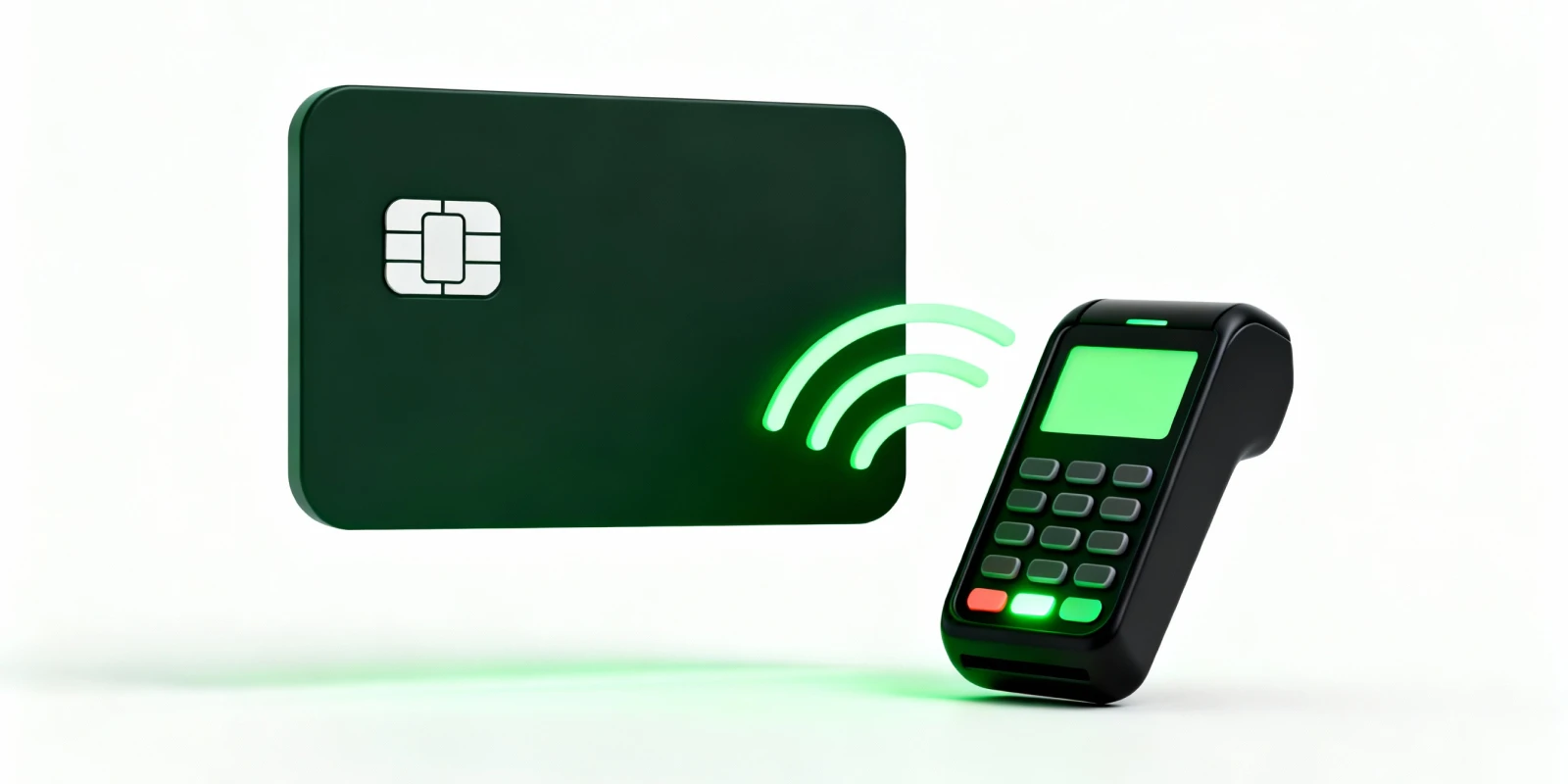
A crypto Visa card is a debit-style card linked to a crypto wallet rather than a current account. You hold crypto (often USDT) in the issuer's wallet. At checkout, the processor converts the amount to GBP in real time. The merchant gets paid in fiat through the standard Visa network. Your wallet balance drops by the converted amount plus any fee or spread.
Two practical points:
- Stablecoins reduce volatility risk at checkout. USDT or USDC funding means your £4 latte doesn't end up costing the BTC equivalent of £6 because the market moved while you were ordering.
- The card is a Visa, not a magic wand. Anywhere Visa is declined (some council services, restricted merchant categories), a crypto card is too.
Are Crypto Cards Legal in the UK?
Crypto cards are legal, but the regulatory layer matters.
FCA registration. Firms doing crypto activities for UK customers should be registered with the FCA under the Money Laundering Regulations. Look the issuer up on the FCA Financial Services Register before depositing serious money.
KYC is standard — and that's a feature. Cards advertised as "no KYC" for UK users are almost certainly outside the regulated perimeter, and outside the consumer protections (chargebacks, dispute resolution, FSCS) you'd want when something goes wrong. A short ID upload is a small price for recourse.
Financial promotion rules. Since October 2023, all crypto promotions to UK consumers must comply with the FCA regime: clear risk warnings, no inducements without a 24-hour cooling-off period, personalised risk warnings on first interaction.
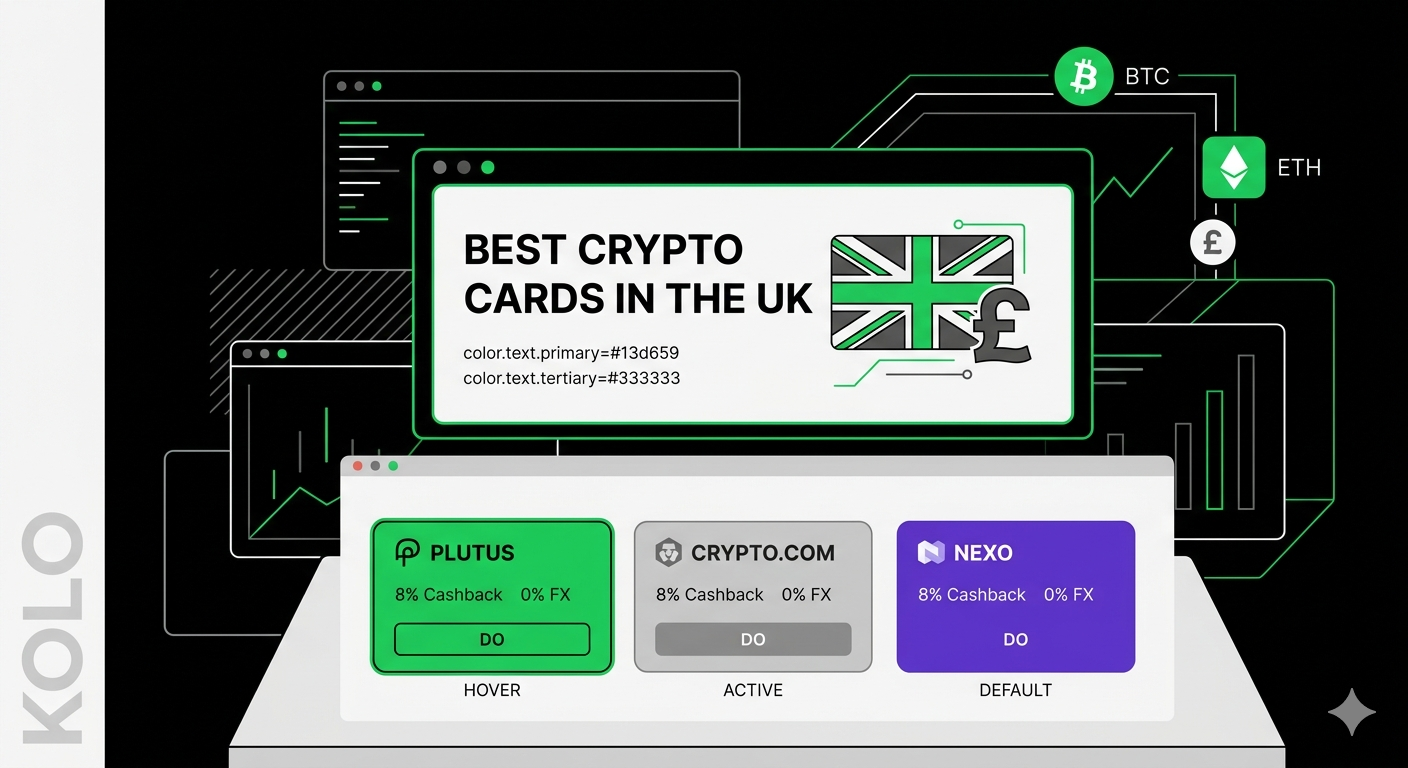
Top Crypto Cards UK Users Should Compare in 2026
Card availability shifts. Treat this as categories to evaluate and verify current UK eligibility before applying.
Telegram-native, stablecoin-first: Kolo
Kolo is a crypto Visa card whose wallet lives inside Telegram, built around USDT spending. For users whose crypto life is already in Telegram, three things make Kolo a strong fit:
- Telegram-native onboarding. Wallet, card controls, and transaction history live inside Telegram — no separate app or extra password. Setup measures in minutes. See Telegram wallet setup.
- USDT-first design. Where Crypto.com or Wirex push you toward a multi-asset balance and a utility token, Kolo is built around USDT. Spending stays predictable, and CGT tracking is far simpler when you're not realising gains on volatile holdings every time you buy lunch.
- 60+ country coverage. A single card that works across most trips a UK-based user takes. See supported countries.
Established crypto-card brands
- Crypto.com Visa — tiered card with cashback in CRO. Cashback rates and staking requirements have changed several times; check current terms.
- Wirex — UK-rooted issuer with multi-currency support and crypto cashback.
- Nexo Card — credit-style card backed by your crypto holdings. Useful if you want to spend without realising a CGT event on every purchase, but understand the loan mechanics first.
- Plutus — hybrid card with a rewards token; scrutinise the reward economics carefully.
For users who already hold USDT and live in Telegram, Kolo is the more natural choice. For users who want a multi-asset balance with cashback rewards, an established brand may fit better.
Key Features to Compare
Supported assets. USDT and USDC give predictable spending. Volatile assets work but introduce timing risk. Stablecoin-first cards remove this category of friction; multi-asset cards trade it for flexibility.
Conversion mechanism. Some cards convert at top-up (you pre-fund a GBP balance); others at point of sale. Point-of-sale conversion is more capital-efficient — your USDT keeps earning yield until the moment you spend.
Limits. Match daily ATM caps and spending limits to how you actually spend.
Mobile and support. Card freeze in one tap, instant notifications, real human support when something goes wrong. Read recent Trustpilot and Reddit threads, not just App Store ratings.
Fees and the True Cost of Spending Crypto
The headline "no fees" is almost always doing heavy lifting. The full cost of running a crypto card in the UK typically includes:
- Conversion spread — the gap between market mid-price and the rate the issuer gives you. Usually the biggest hidden cost. A 1% spread on £2,000 monthly spend is £240 a year, often more than every visible fee combined.
- Card issuance fee — one-off, sometimes waived on virtual cards.
- Monthly maintenance fee — common on premium tiers.
- FX fee for non-GBP transactions.
- ATM fee — flat or percentage, plus any local operator fee.
- Inactivity fee — yes, some issuers charge it.
Practical exercise: estimate one month of realistic spending, apply every relevant fee, and compare cards on total cost rather than on the line item the provider chose to highlight. See USDT to GBP conversion for the deeper mechanics.
UK Tax: How HMRC Treats Crypto Spending
Every time you spend crypto in the UK, HMRC treats it as a disposal — the same as if you sold the crypto for GBP and used the proceeds for your sandwich.
- CGT applies on the gain or loss between your acquisition cost and GBP value at spend.
- Stablecoins aren't exempt. USDT and USDC gains are usually small, but they need to be tracked. This is a quiet argument for stablecoin-first cards: a year of USDT spending generates orders of magnitude less tax complexity than a year of BTC spending.
- The annual exempt amount has fallen. Check the current allowance on gov.uk.
- Records are on you. Export your card's transaction history regularly; pair it with Koinly, Recap, or CoinTracking.
How to Choose the Right Crypto Card
Five-minute decision framework:
- What do you hold? 90% USDT → stablecoin-native cards with low spreads (Kolo). Mixed BTC/ETH spending → multi-asset card from an established issuer.
- Where does your crypto life happen? In Telegram → Telegram-native card saves recurring friction. Standalone wallets and exchanges → traditional crypto-card app fits better.
- How often will you use it? Five-times-a-month card needs to win on spread; daily driver needs to win on both spread and fees.
- Where will you spend? UK-only favours GBP-denominated cards. Frequent travel makes broad coverage matter — Kolo's 60+ country footprint fits travellers.
- Test small. Top up the equivalent of £50, run a week of normal transactions, compare actual GBP charged versus market rate. The how-to-use guide walks through your first transaction.
Frequently Asked Questions
Can I get a crypto card in the UK without KYC?For a card that lets you spend GBP at UK merchants, no — KYC is mandatory under UK AML rules. Any compliant programme, including Kolo, will require ID verification.
Which crypto card is best for spending USDT?Telegram-native options like Kolo are purpose-built for stablecoin spending: USDT funding, point-of-sale conversion, and onboarding inside the messenger you're already using.
Do I pay tax every time I spend crypto?Yes — HMRC treats every crypto disposal as a CGT event, including spending. Stablecoins generate tiny gains; volatile assets can generate significant ones.
Is the Kolo card available in the UK?Coverage spans 60+ countries and shifts as the programme expands. Confirm current UK eligibility before starting onboarding.
Final Thoughts
The best crypto card UK option is the one whose fees, supported assets, and regulatory footing match how you'll actually use it.
If you hold mostly USDT and your crypto already lives in Telegram, Kolo's combination of Telegram-native onboarding, stablecoin-first design, and 60+ country coverage is the most natural fit on the market today. If you want a multi-asset balance with native cashback, an established brand may serve you better.
Whichever you pick: verify the issuer on the FCA register, read the full fee schedule, track spending for HMRC from day one, and run a small live test before scaling up.
Ready to spend USDT like cash? Open the Kolo bot in Telegram and order your card — your first conversion at checkout takes minutes.
This article is information only and does not constitute financial, tax, or legal advice. Cryptoasset rules and tax allowances change frequently. Cryptoassets are high risk: you may lose all the money you invest.